
See also


 17.11.2026 09:26 AM
It seemed that April 2, 2025, had permanently dented confidence in the US currency. Yet the dollar index has climbed back toward 103.60, the highest level since the day Donald Trump announced tariffs. As a result, EUR/USD fell below 1.10 for the first time since April 2025.
Back then, the dollar, Treasuries, and stocks fell together, and the market began to talk of "selling America." The US dollar index lost more than 9% in 2025, its worst annual performance since 2017. Now, as the tide pulls back to the old shoreline, the greenback has recouped those losses. The broader Bloomberg Dollar Spot index, which includes emerging-market currencies, also rose to a May 2025 high.
The AI boom is a key support for the dollar. Investment and a wealth effect from rising equity values have boosted consumption, and the Atlanta Fed's leading indicator forecasts 3.5% GDP growth in Q4. Foreign investors have not fled US markets; they have added dollar assets.
Yield spread and EUR/USD dynamics
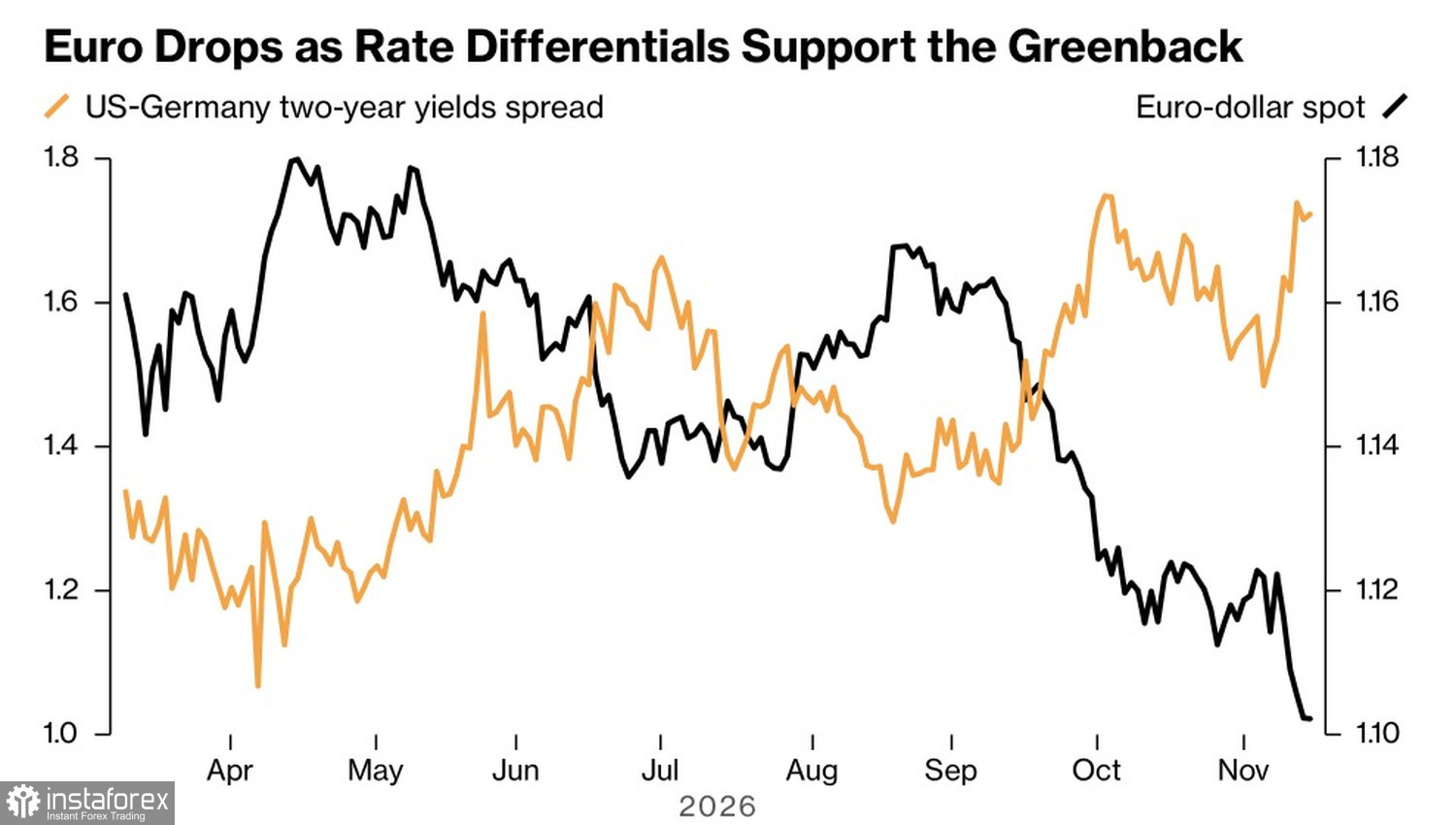
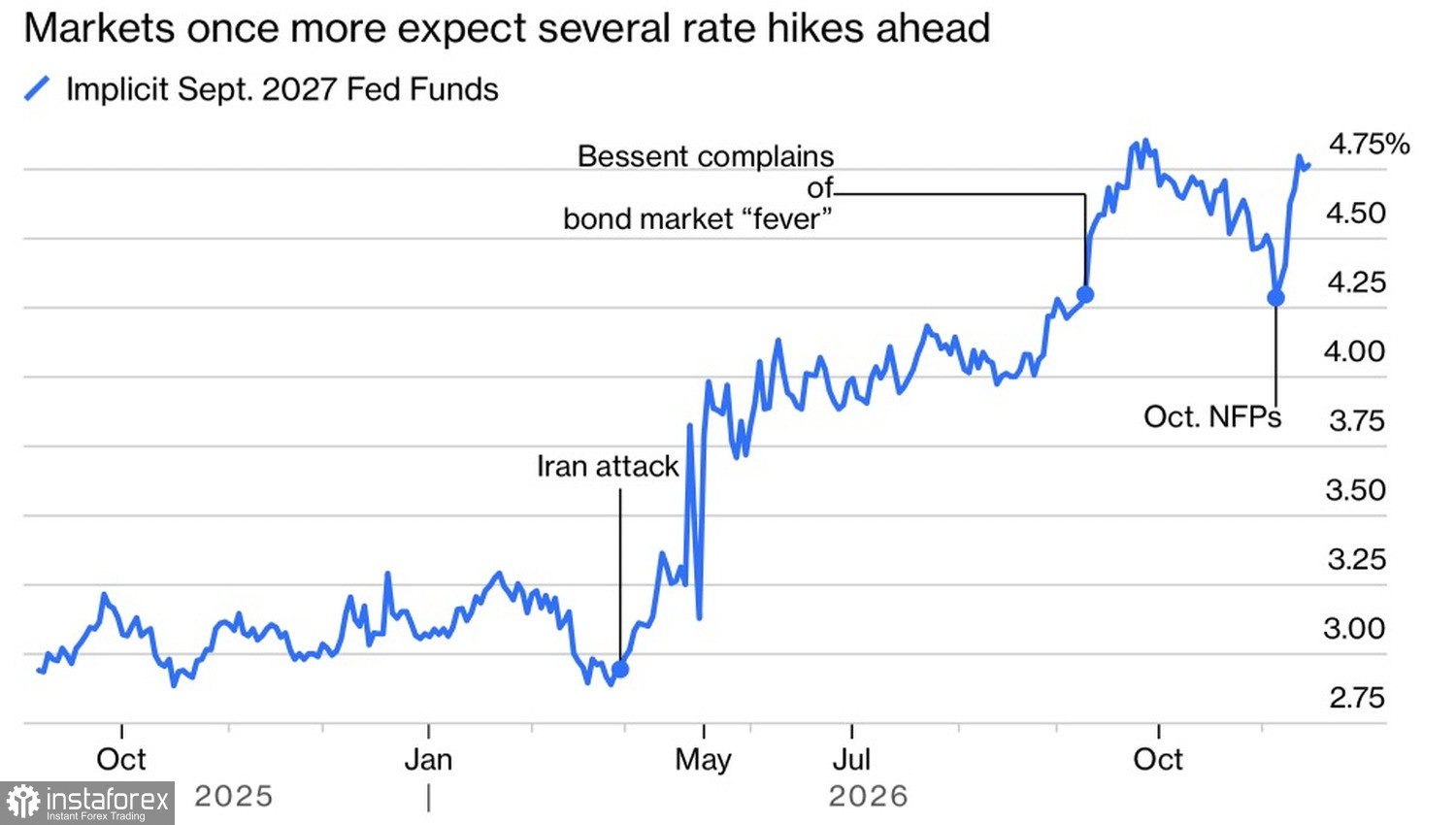
A positive factor for the dollar is the Fed's policy shift. After two years of easing, the central bank moved to raise the fed funds rate. The market now prices in roughly 85 bps of tightening over the next year versus about 71 bps at the ECB, so the US-Germany yield gap is widening and pulling EUR/USD lower.
Rhetoric is also working in the dollar's favor. Fed Chair Kevin Warsh skirted explicit rate guidance but said AI's potential to fire up the economy is far from exhausted, and investors concluded it is not too late to buy dollars. Cleveland Fed President Beth Hammack favors modest rate increases but leaves the door open to larger steps if inflation worsens.
Market pricing of Fed moves
France remains a headwind for the euro: missed deficit targets and persistent protests leave the single currency on a powder keg, and cheaper energy has not helped. Funds have piled into bullish dollar positions against the euro, pushing net longs toward 2020 highs.
EUR/USD options show steady demand for downside protection, and weekly sentiment is the most bearish since mid-October. Danske Bank attributes the move primarily to strong US data and an increasingly hawkish Fed reaction.
However, Bank of America remains dollar-bearish, expecting reserve diversification and citing IMF data on the first meaningful shifts from the dollar to the euro. ING warns that the market may be overpricing Fed tightening. The debt-ceiling standoff and a possible government shutdown could also slow US GDP growth.
What will happen to the dollar if the AI boom starts to cool?
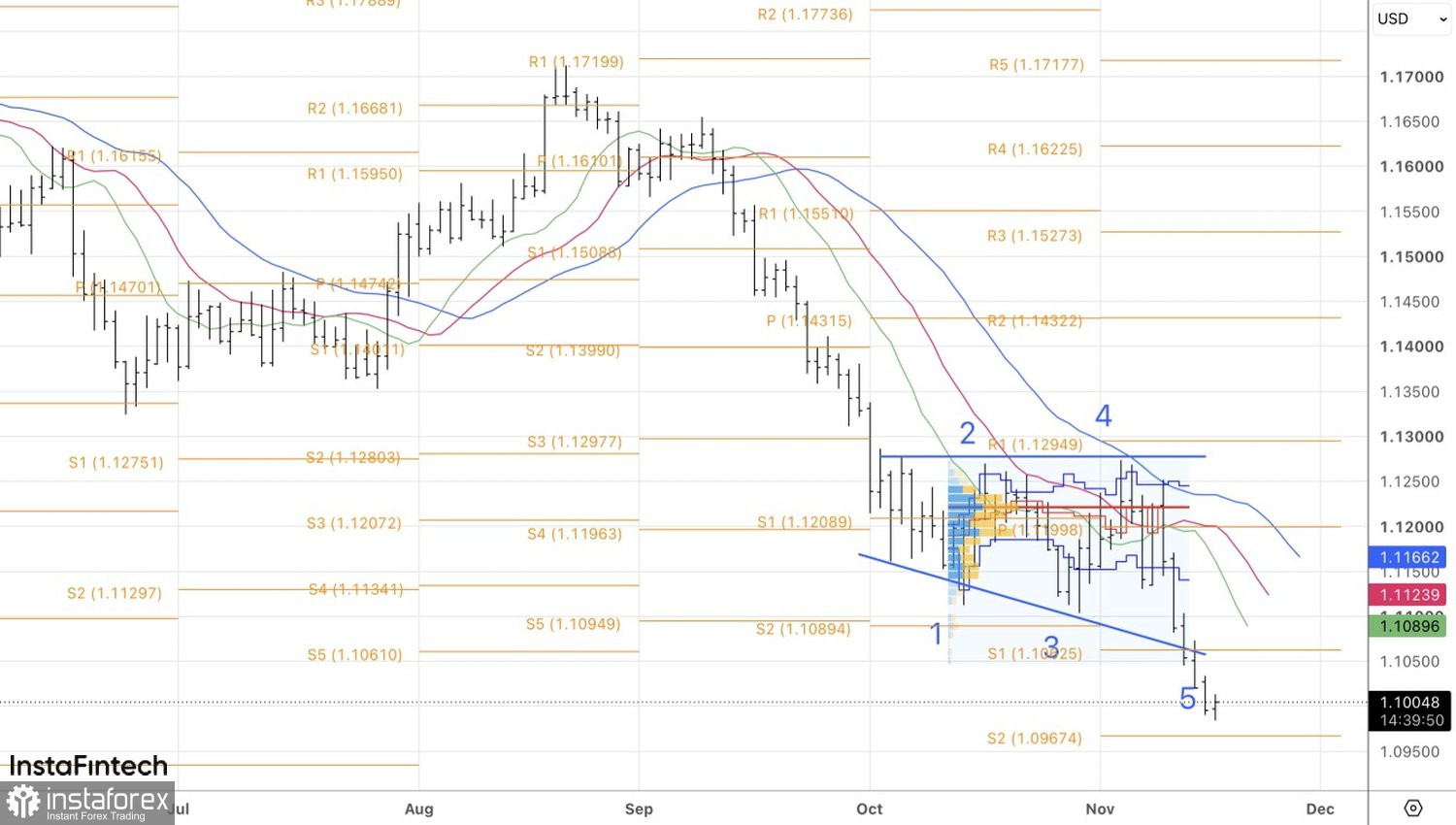
Technically, the daily EUR/USD chart shows a continued downtrend. Euro pullbacks off key pivot levels at 1.106, 1.109, and 1.1135 should be used to add short positions.


